iPhone · iPad · Mac
Ships through Apple TestFlight — install in about a minute.
Join on TestFlightFree during beta
“Open thou mine eyes, that I may behold wondrous things out of thy law.” — Psalm 119:18
Commentaries, confessions, hymns, and 6,211 letters — from Augustine to Spurgeon — one tap from the text you are reading. Even with no signal.
Free during beta · iPhone · iPad · Android · Mac · Windows · Linux
The Daily Devotional
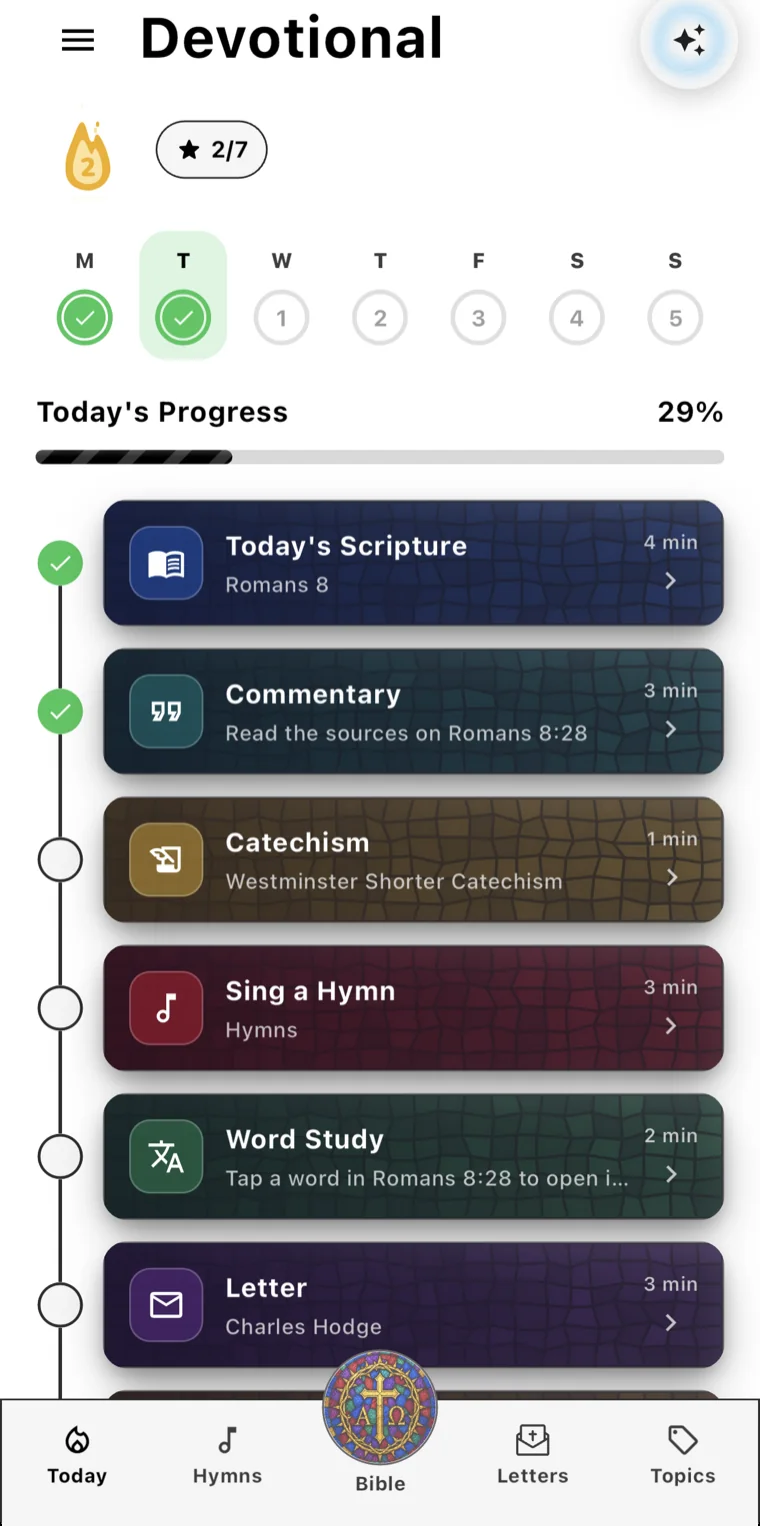
A guided seven-step walk each morning: Scripture, commentary, catechism, word study, a letter from church history, a hymn, and quiet reflection. Finish any one step and the day is banked — the flame grows as you stay faithful.
7 steps one growing flame
Verse Sources
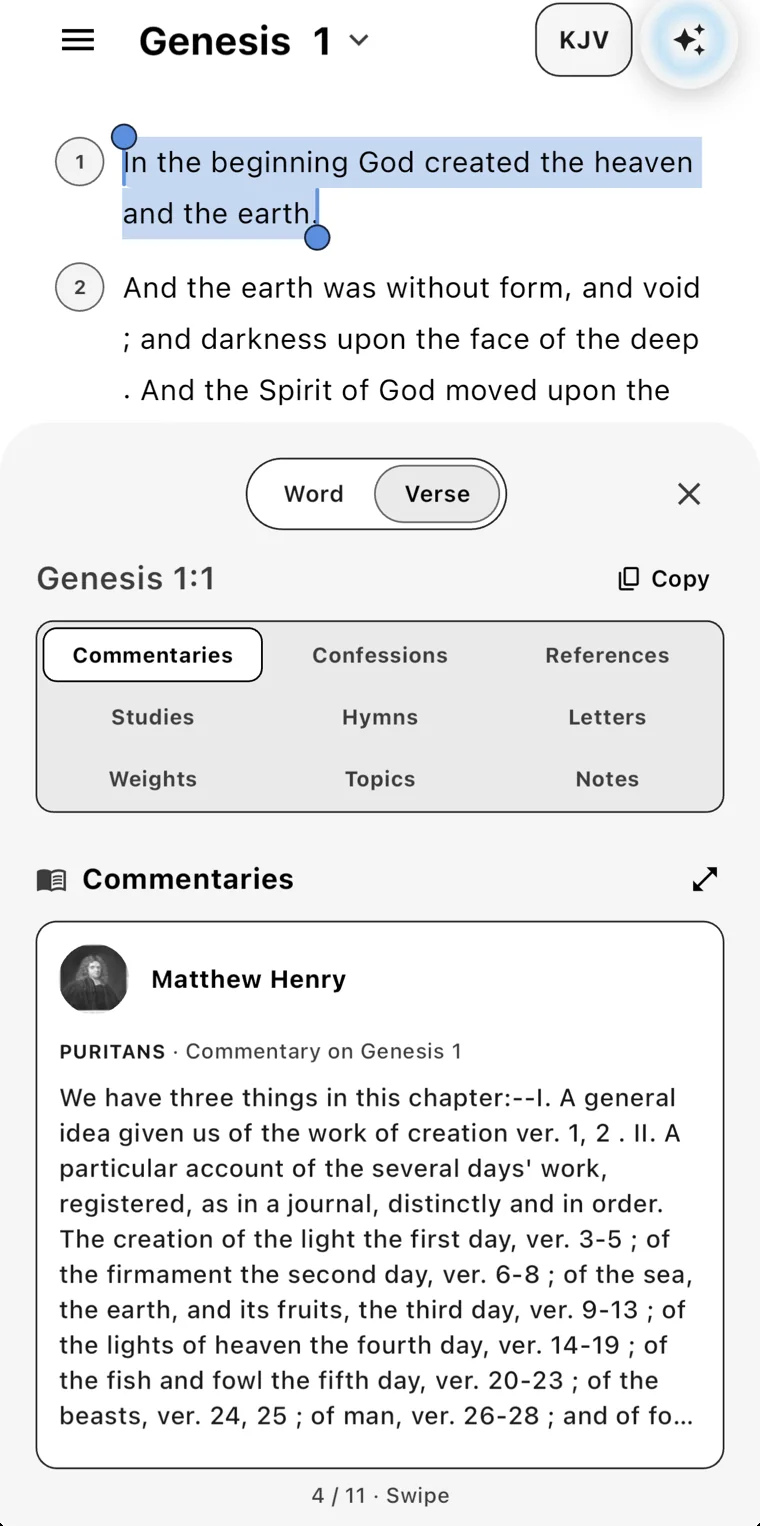
Tap a verse and nine doors open: commentaries from Matthew Henry to Chrysostom, the confessions that cite it, its cross-references, the hymns that sing it, the letters that quote it — and your own studies and notes.
9 doors on every verse of Scripture
Matthew Henry · Puritans
“We have three things in this chapter: — a general idea given us of the work of creation…”
Illustrative preview — the real panel opens on any verse.
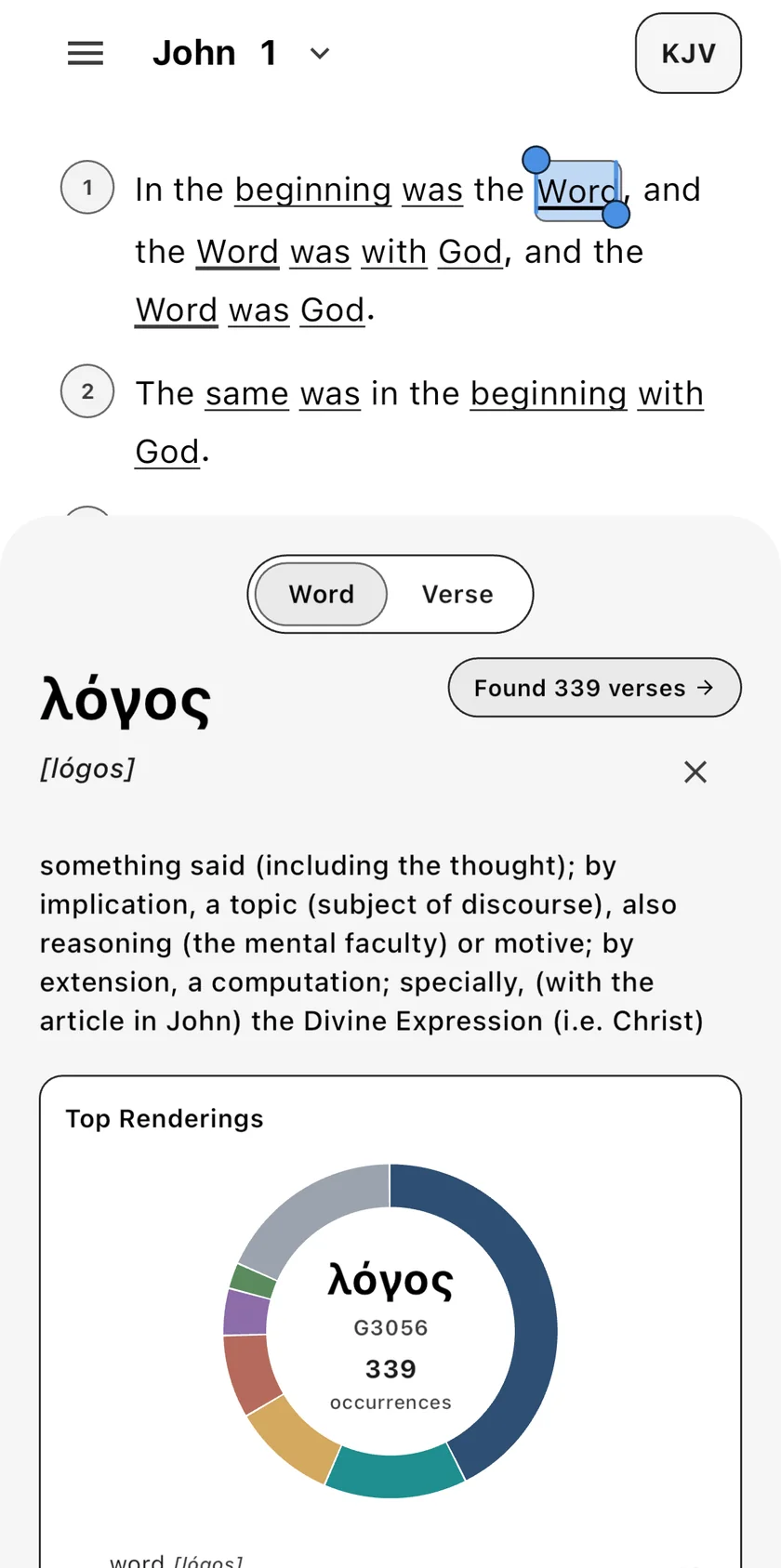
Greek, Hebrew, & Latin
Tap any word to meet the Greek, Hebrew, and Latin (Vulgate) behind it — its meaning, its pronunciation, and all 339 places λόγος appears in the canon, with a chart of how the translators rendered it.
339 occurrences of λόγος, one tap away
Reference Weight Premium
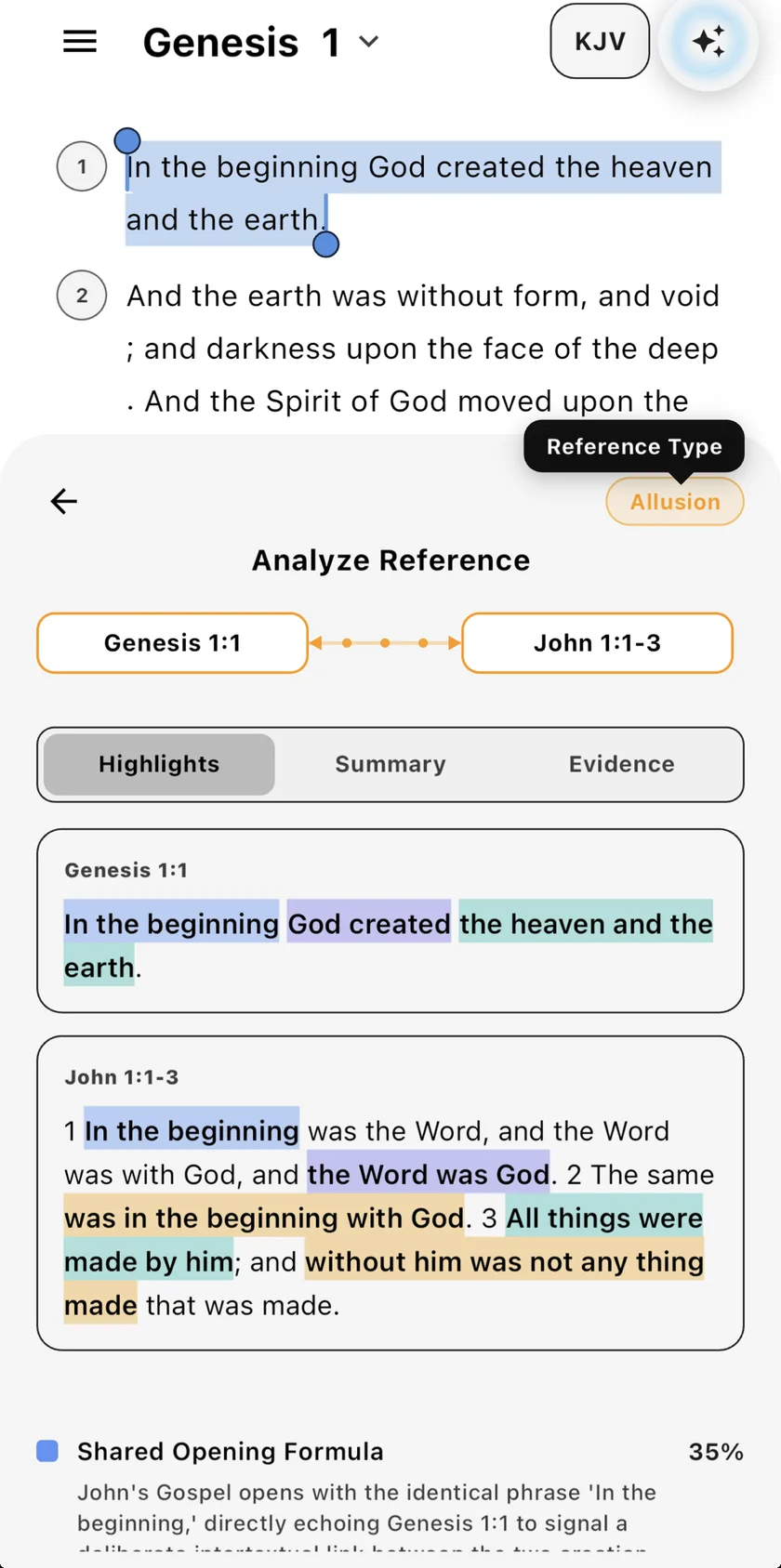
Genesis 1:1 and John 1:1 open with the same words — on purpose. Tap any cross-reference and see how two passages actually connect: shared language, prophecy, theme — each thread weighted, with matching color on the very words that carry it.
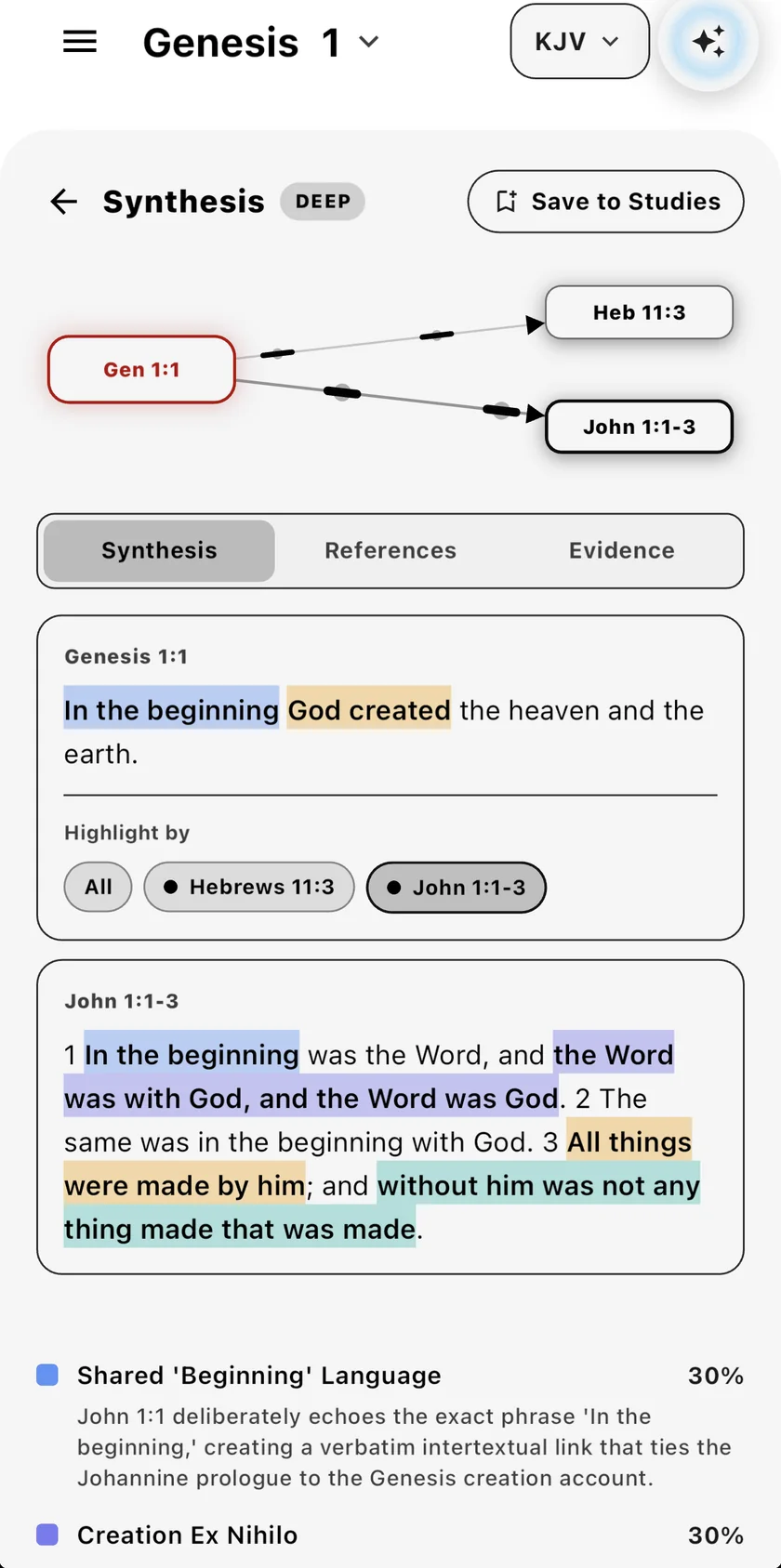
Deep Synthesis Premium
Choose up to six cross-references and watch them woven into one analysis: every connection named, weighted, and colored onto the very words that carry it — from “In the beginning” to “the Word was God.” The finished synthesis lands in your studies.
Up to 6 passages woven into one analysis
Synthesis Deep
Saved to your studiesGenesis 1:1
In the beginning God created the heaven and the earth.
John 1:1–3
In the beginning was the Word, and the Word was with God, and the Word was God. … All things were made by him.
Verbal echo 0%
Three of the four passages open on the very same phrase.
Doctrine 0%
Creation through the eternal Word — spoken, not assembled.
Shared theme 0%
All things made; nothing made apart from him.
Structure 0%
Genesis and John each stand at the head of their book — a deliberate echo.
Illustrative preview — in the app every weight cites its evidence.
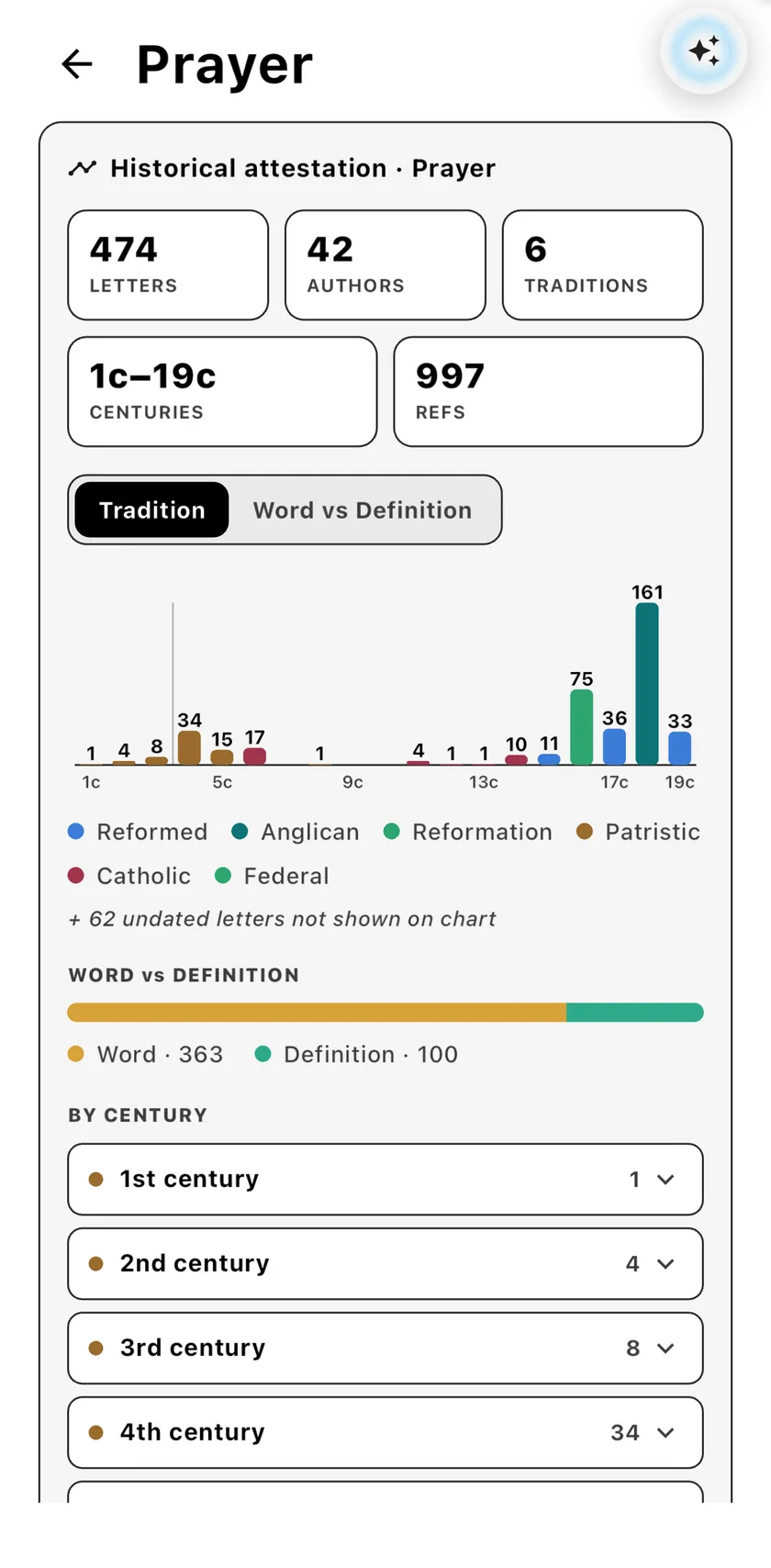
Topics
You already do this in the margins — a triangle for the Trinity, a (C) for the covenants, an anchor for TULIP. Topics gives that instinct a memory: name the idea, define it in your own words, and the app threads it through Scripture, 6,211 letters, and 218 hymns — tagged by hand, or scanned for you by AI against your framing.
1c–19c one topic’s trail through church history
△ Trinity · (C) Covenants · P: Prayer · ♡ Love · ⚓︎ T.U.L.I.P.
Tagged by hand ✦ Matched by AI
Word vs. definition across history
A doctrine’s idea is often taught long before a single word names it. The Trinity was defined from the earliest letters and Scripture — the term arrived in the 2nd century, and was creedally fixed at Nicaea (325).
Definition (the idea) Word (the term)
Illustrative preview — in the app the scan runs on your own definition.
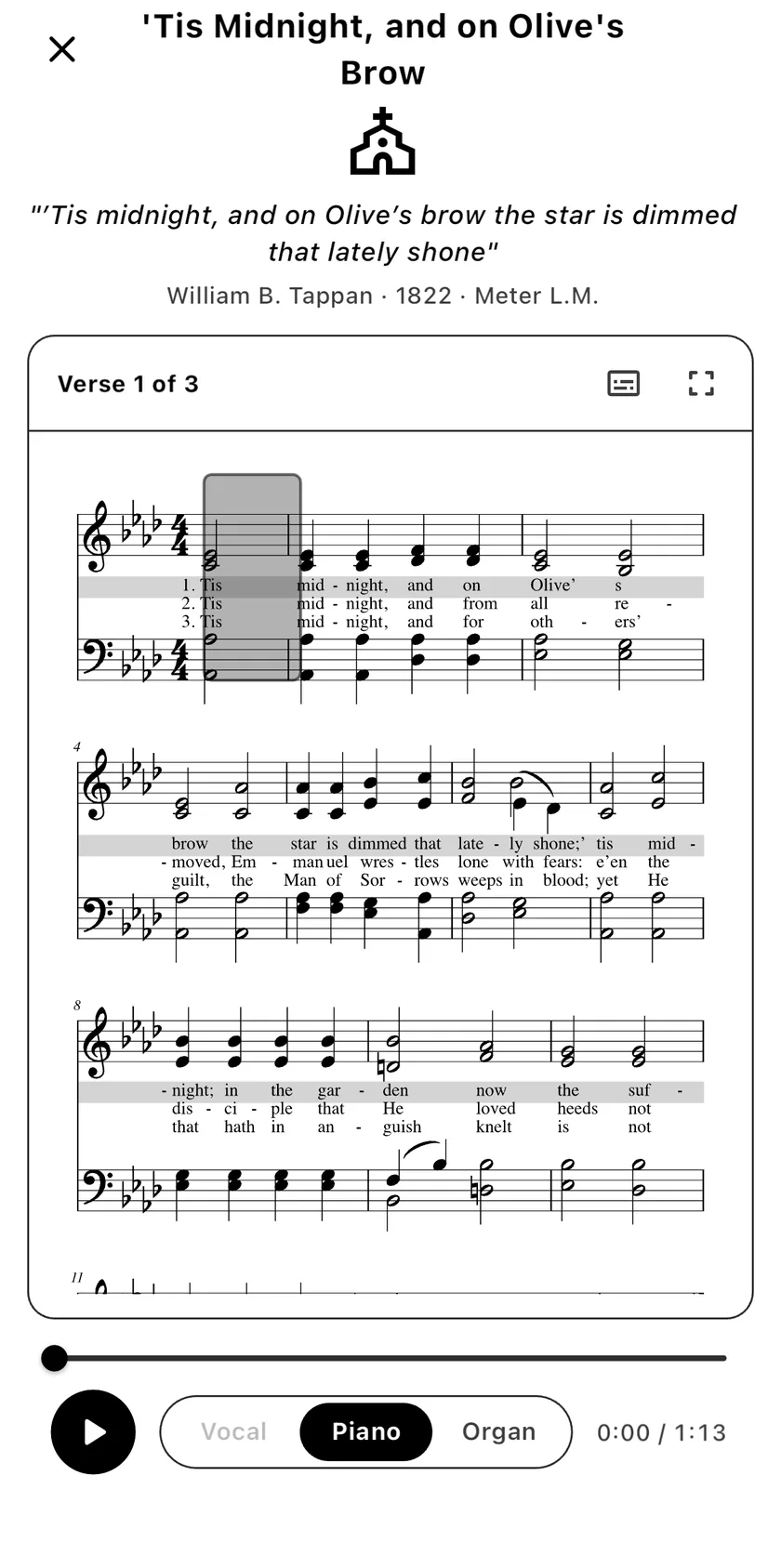
Hymns & Psalms
218 hymns and psalms from 10 historic hymnals — the Scottish Psalter of 1650, the Trinity Hymnal, Hymns Ancient & Modern. Open one and the sheet music itself plays: an amber cursor walks the staff verse by verse, in piano, organ, or choir.
217 engraved scores with a synced cursor
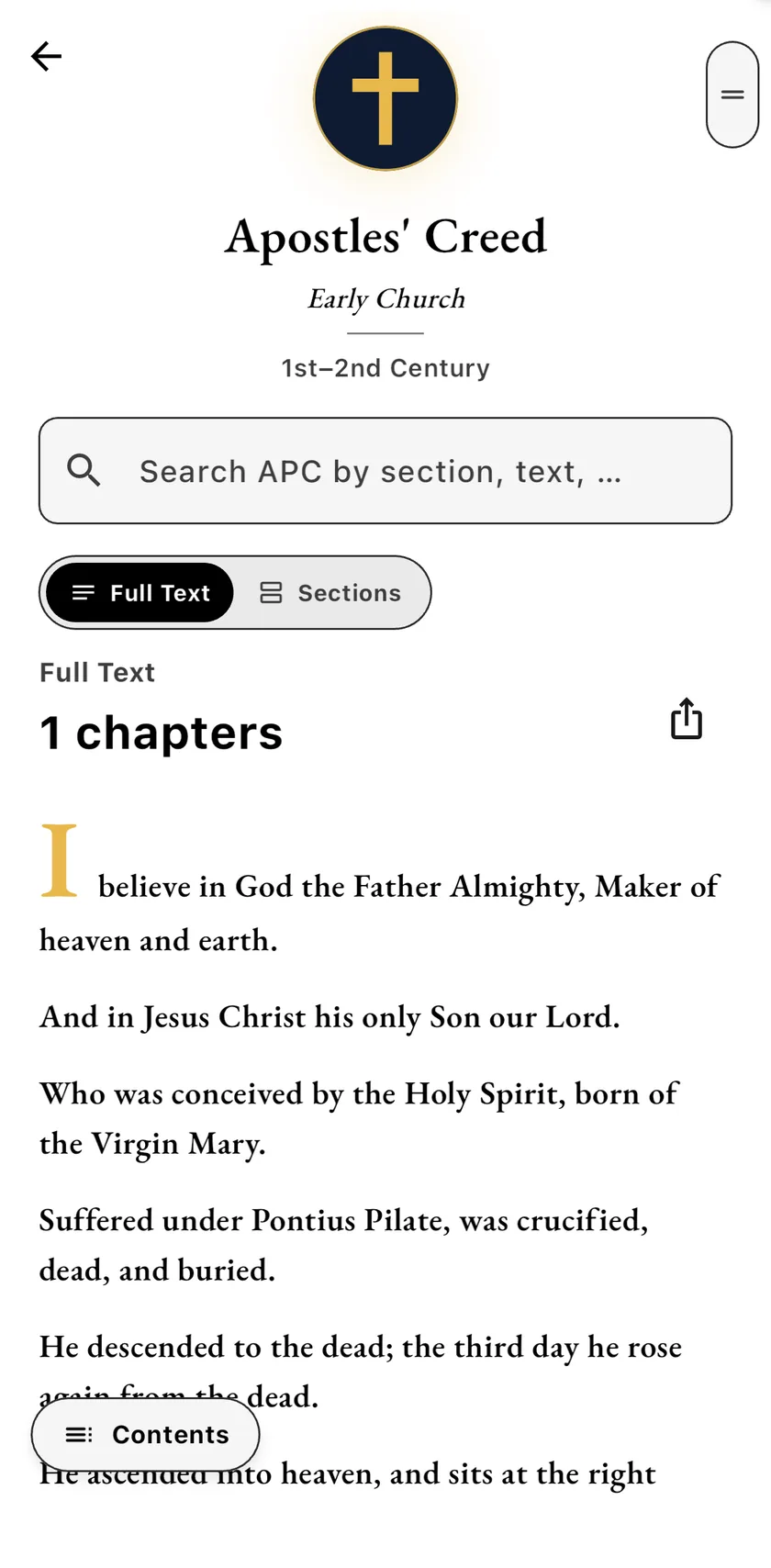
Creeds & Confessions
12 creeds, confessions, and catechisms — the Apostles’ and Nicene Creeds, Luther’s Small Catechism, the Scots Confession, the Thirty-Nine Articles, the Westminster Standards — each under its own monogram seal, dated and attributed, readable in full text or section by section. Downloaded once, carried offline.
12 creeds, confessions & catechisms
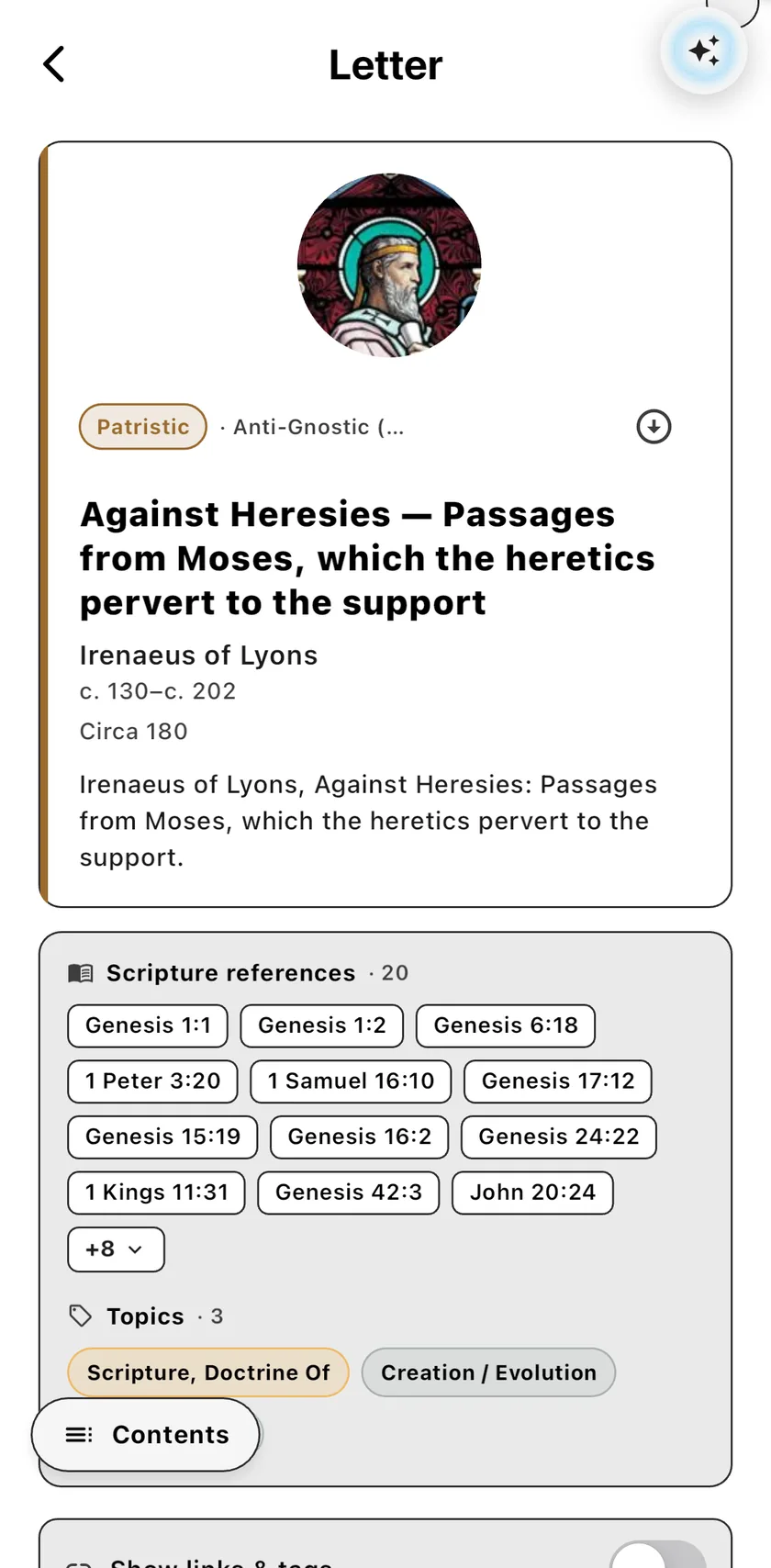
Letters of the Church
6,211 letters from 58 writers across nineteen centuries — Clement of Rome, Athanasius, Augustine, Luther, Calvin, Rutherford, Newton, Spurgeon. A Letter of the Day meets you each morning, and any letter that cites the verse you are reading appears beside it.
6,211 letters, downloadable for offline reading
The Journal
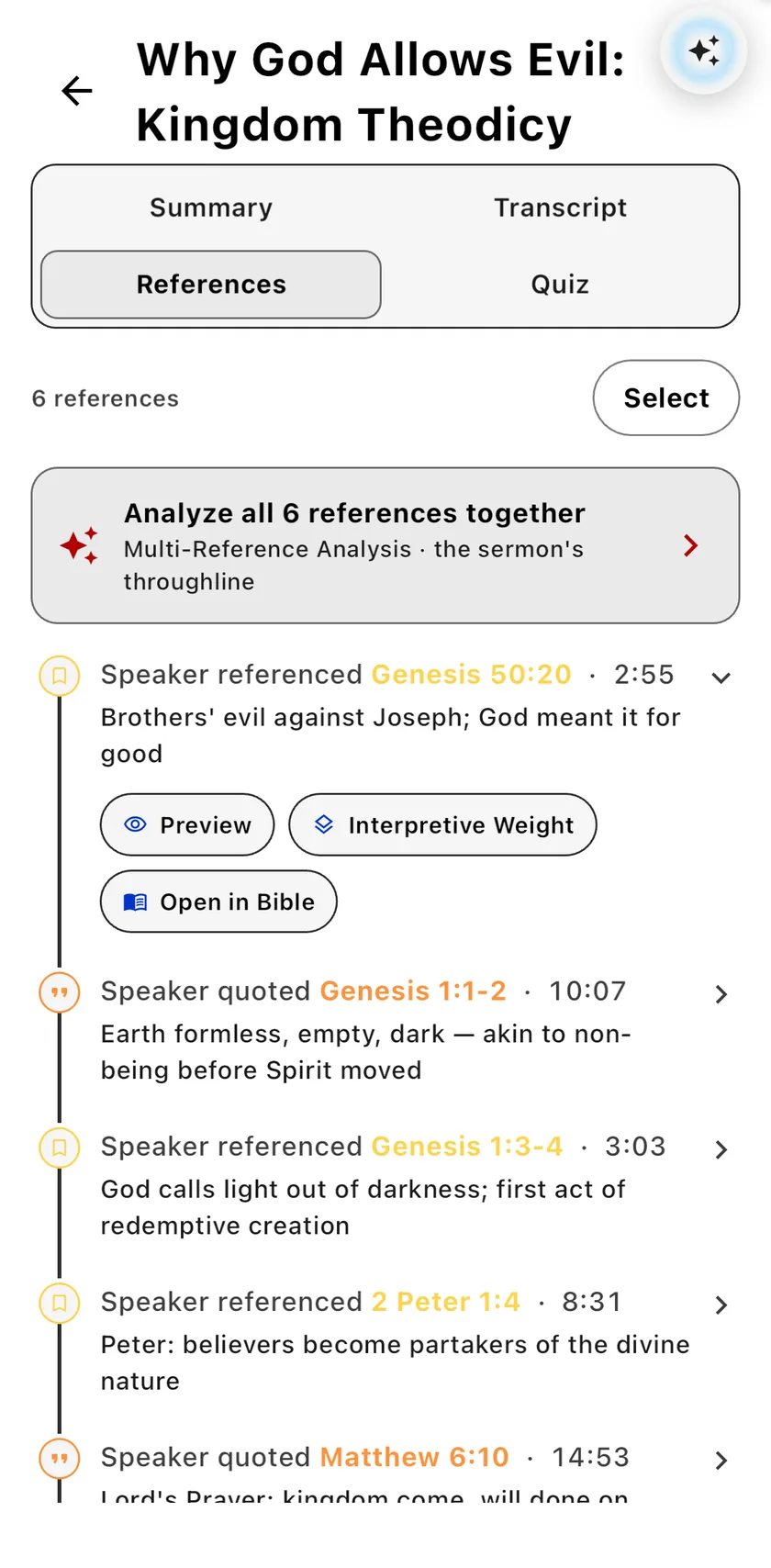
Paste a link or record the room — the Journal transcribes any sermon, lecture, or Bible study, then studies it with you: a clean editable summary, every Scripture the speaker cited pinned to the second they said it, and a quiz to prove you were listening.
4 views summary · transcript · references · quiz
Why God Allows Evil: Kingdom Theodicy
Gold ticks — where Scripture was quoted.
Speaker referenced Genesis 50:20 · 2:55
Brothers' evil against Joseph; God meant it for good
Speaker quoted Genesis 1:1–2 · 10:07
Earth formless, empty, dark — akin to non-being before Spirit moved
Speaker quoted Matthew 6:10 · 14:53
Lord’s Prayer: kingdom come, will done on earth as in heaven
Then the quiz
Question 2 of 5 According to the speaker’s interpretation of Genesis 1, why does the Bible describe darkness before light?
✓ Correct. “If the light was good, that implies the darkness was evil” — graded against the speaker’s own argument, not a generic answer key.
1. The darkness was created by Satan before God created the light to oppose Him
2. Darkness is simply the absence of light and has no moral significance
3. The darkness represents God’s hiddenness before the incarnation of Christ
4. The darkness represents evil non-being, and the separation of light from darkness implies that darkness was evil
Illustrative preview — from a real recording’s summary, references, and quiz.
Study Assistant
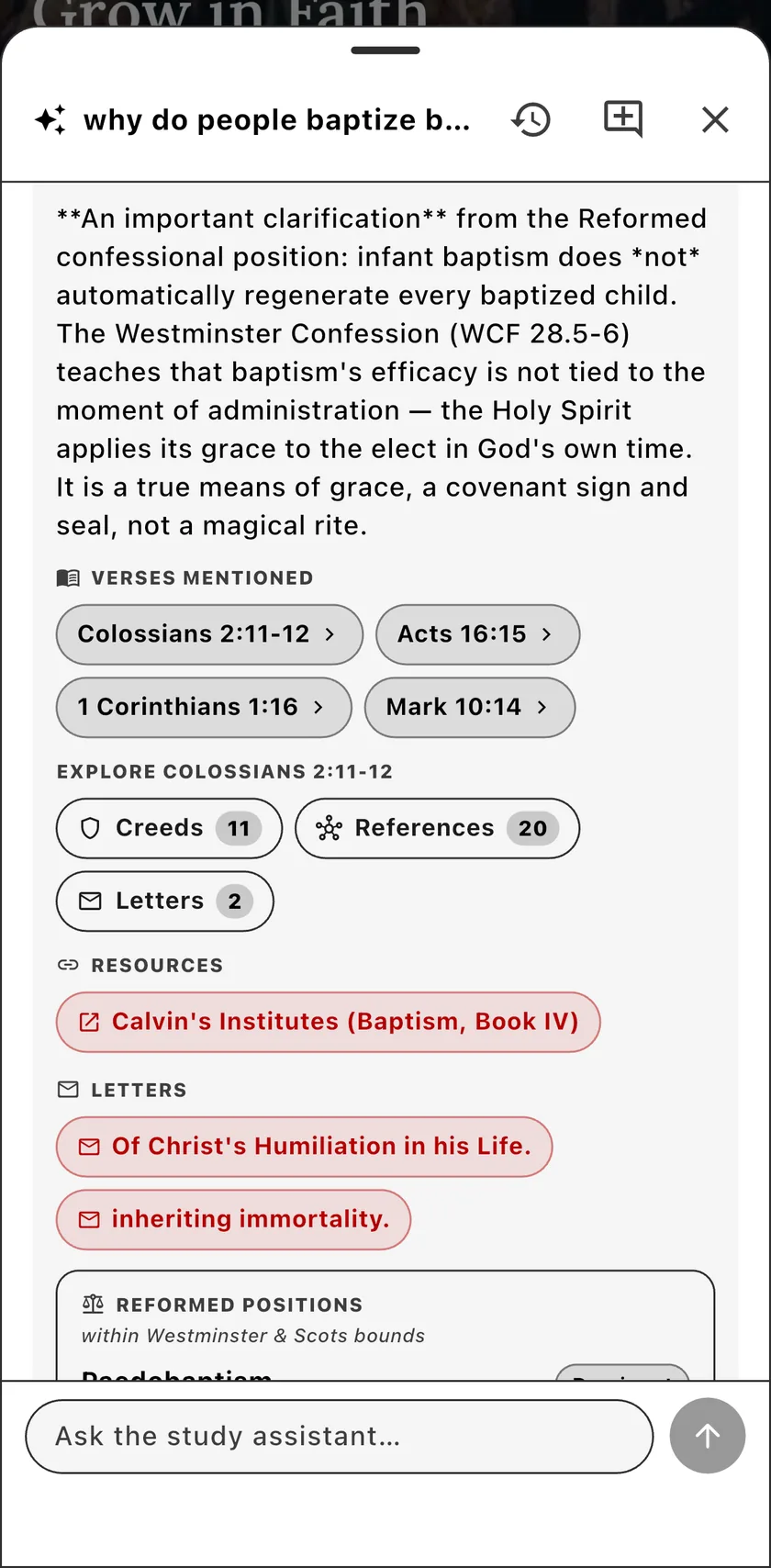
Ask the question you’d ask a pastor — “why do people baptize babies?” — and the Study Assistant answers from Scripture and the Reformed confessions. Every verse it cites becomes a tappable chip with the creeds, cross-references, and letters behind it; it points you to Calvin and the church’s own letters; and when it spots a connection worth keeping, it proposes the action — and acts only ever with your yes.
Your yes required before it touches your library
Study Assistant
Why do people baptize babies?
The Covenant Argument is central. In Genesis 17 the covenant sign was applied to infants in the household; Colossians 2:11–12 links baptism to circumcision — so the sign belongs to the children of believing parents too, as whole households were baptized throughout Acts.
An important clarification from the Reformed confessions: baptism is a covenant sign and seal, not a magical rite — its efficacy is not tied to the moment of administration (WCF 28.5–6).
Verses mentioned
Colossians 2:11–12 ›Acts 16:15 ›1 Corinthians 1:16 ›Mark 10:14 ›
Explore Colossians 2:11–12
Creeds 11References 20Letters 2
Resources & letters
Calvin’s Institutes (Baptism, Book IV) Of Christ’s Humiliation in his Life
Reformed positions · within Westminster & Scots bounds
Paedobaptism — the confessional view, with the texts each side cites.
Create this connection?
Genesis 17:12–13 ↔ Acts 16:15
✦ Analyze Reference
Yes No Discuss further Change subject
✓ Connection created — saved with your note and topics.
Illustrative preview — a real exchange, condensed. Speak or type.
And it keeps going
The complete KJV audio Bible — downloadable, offline, chapter by chapter.
A daily verse, the catechism, a letter, a hymn, and your streak.
Catechism, Scripture memory, Greek, Hebrew, and Latin — spaced so you don’t forget.
10 classic commentators and 12 confessions, creeds, and catechisms.
Concept and reference diagrams — then export the whole study as a PDF.
From EB Garamond to clean sans — Scripture set the way you love to read.
See your walk through Scripture — what you’ve read and how it’s growing.
Sign in with Apple, Google, or email — notes and streaks follow you.
Thirty days of full offline use — sermons and studies don’t wait for signal.
Every device
Phone on the go, tablet in the study, desktop at the desk — your notes, streak, and library follow you to every one of them.
Windows and Linux betas are unsigned builds — first-launch steps are on the beta page.
Get it on your devices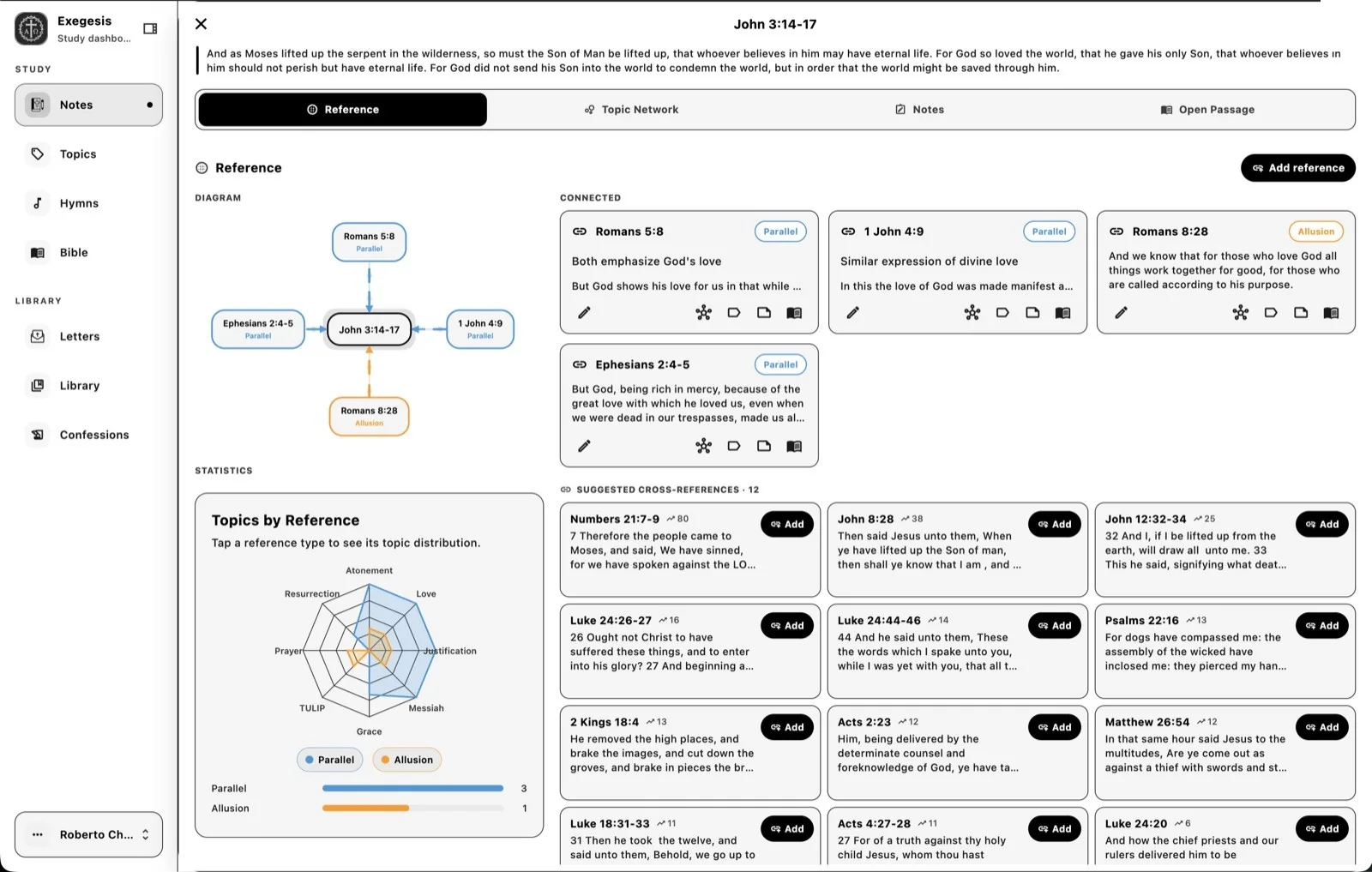
Take it with you
Current beta · v1.0.0
Ships through Apple TestFlight — install in about a minute.
Join on TestFlightFree during beta
Request access with your Google account email; invites go out daily.
Request accessFree during beta
Direct downloads — a .exe installer and a portable AppImage.
Download for desktopUnsigned beta builds